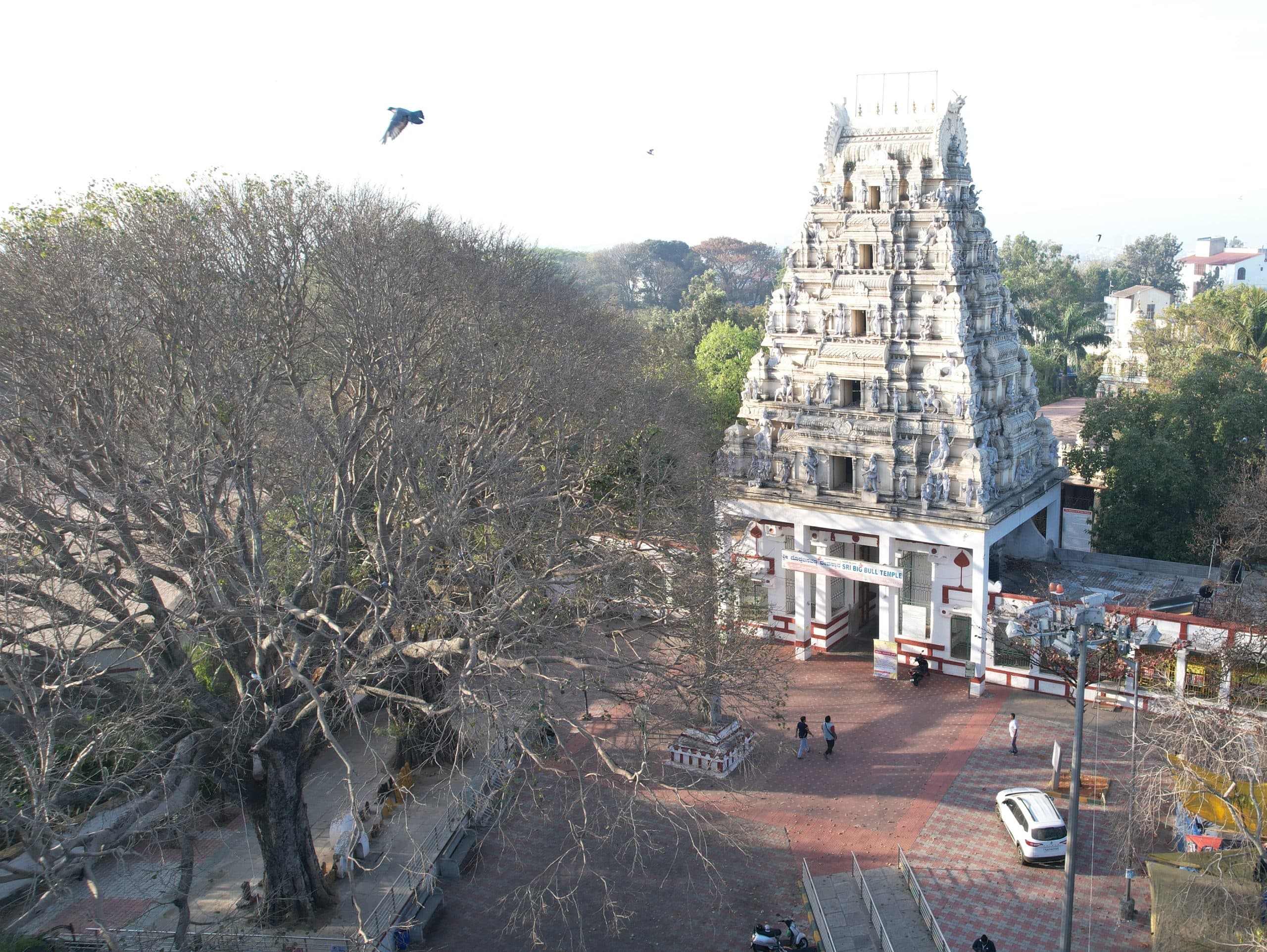
On a quiet hillock in Basavanagudi, the Bull Temple is one of Bangalore’s oldest and most fascinating landmarks. Built nearly 500 years ago, the temple is home to a giant monolithic statue of Nandi, the bull that serves as Lord Shiva’s vehicle. Locals call it Dodda Basavana Gudi, which simply means “Big Bull Temple” in Kannada.
Whether you are a devotee, a history lover, or just someone exploring Bangalore’s older neighbourhoods, the Bull Temple offers a peaceful break from the city’s busy streets. In this guide, we cover everything you need to know before visiting, including the temple’s history, architecture, timings, and the famous groundnut fair held here every year.
Quick Info
| Location | Bull Temple Road, N.R. Colony, Basavanagudi, Bengaluru, Karnataka 560004 |
| Built In | 1537 AD, during the reign of Kempe Gowda I |
| Dedicated To | Nandi, the bull and vehicle of Lord Shiva |
| Timings | 6:00 AM to 8:00 PM, every day |
| Entry Fee | Free for all visitors |
| Nearest Landmark | Bugle Rock Park |
| Famous For | A 20-21 foot monolithic Nandi statue carved from a single granite rock |
| Best Time To Visit | October to February |
History of Bull Temple
The Bull Temple was built in 1537 by Kempe Gowda I, the chieftain who is widely regarded as the founder of Bangalore. The temple was constructed in the Dravidian style of architecture, drawing inspiration from the grand temples of the Vijayanagara Empire, much like the structures found in Hampi.
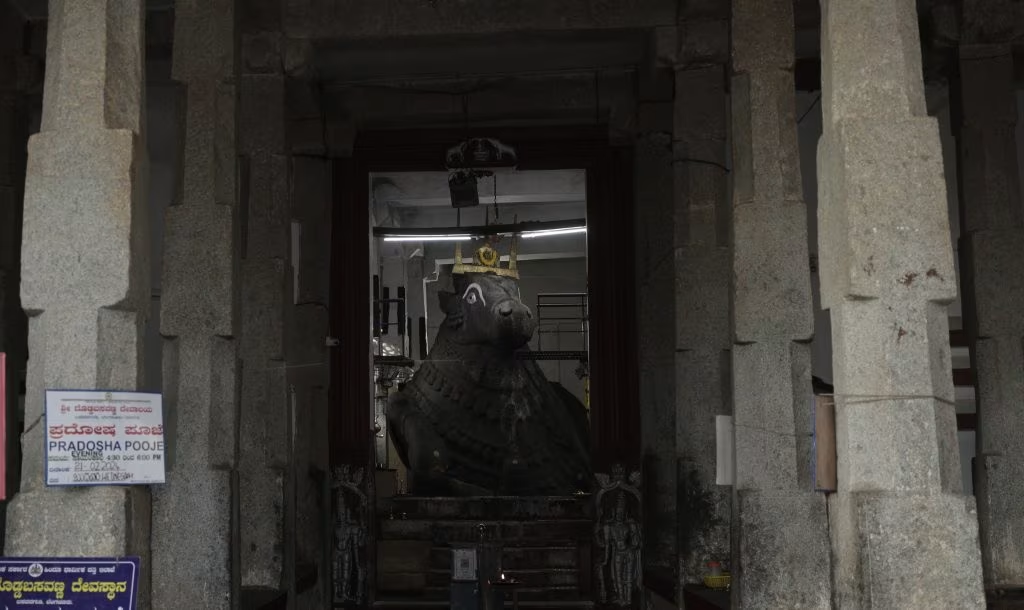
At the heart of the temple sits a massive Nandi statue, carved out of a single block of granite. The monolithic Nandi statue stands 15 feet tall and measures roughly 20 to 21 feet in length. Over the centuries, devotees have poured coconut oil over the granite surface as an offering, which has gradually turned its color from original grey to a deep black sheen. and is considered one of the largest Nandi idols in the world.
The Legend Behind the Temple
According to local legend, the area around Basavanagudi was once covered in groundnut fields. Farmers noticed that a mysterious bull would sneak into the fields at night and eat their entire harvest. One farmer decided to keep watch and discovered that the bull was actually a manifestation of Nandi, Lord Shiva’s sacred vehicle.
Once word spread, the farmers decided to build a temple at the very spot where the bull was seen, so it would no longer need to raid their crops. They also began the tradition of offering the first harvest of groundnuts to the deity, a custom that continues to this day through the annual Kadalekai Parishe, or Groundnut Fair.
Architecture of Bull Temple
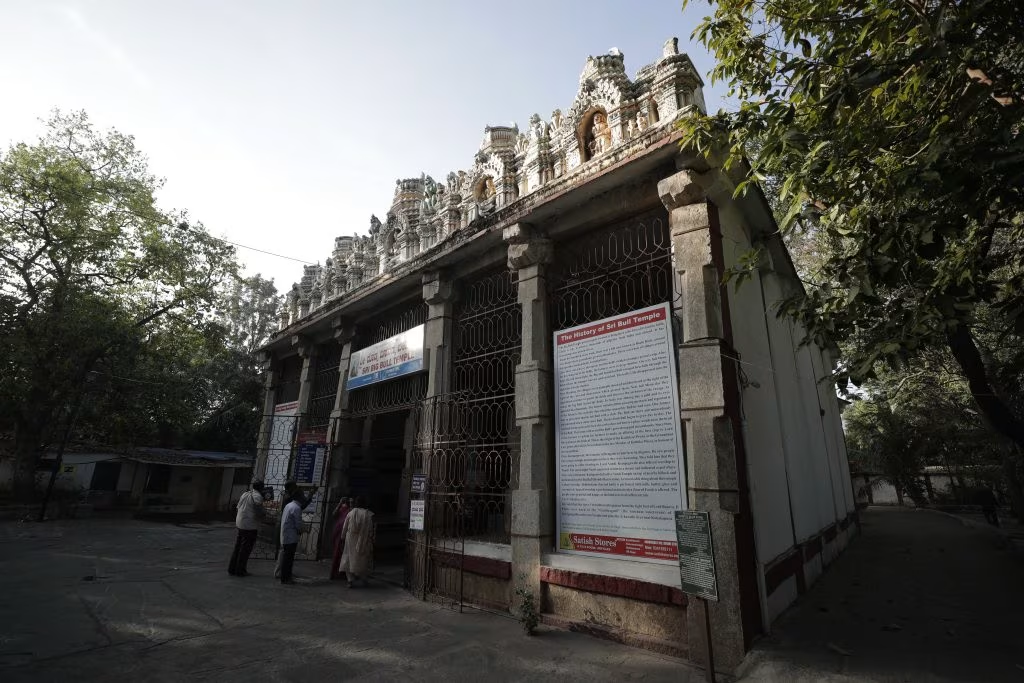
The Bull Temple stands out for its simple yet powerful Dravidian architecture. Unlike many ornate temples in South India, this one draws its charm from scale rather than decoration. The giant Nandi statue dominates the inner sanctum, flanked by smaller idols of the Sun god Surya and the Moon goddess Chandra on their respective chariots.
The temple complex also includes Dodda Ganapathi Temple, located just a short walk away. This temple houses a large idol of Lord Ganesha, which is covered in over a hundred kilograms of butter and refreshed every few years. Visiting both temples together gives a fuller picture of the area’s religious and architectural heritage.
The temple sits on Bugle Rock, a rocky outcrop that offers a slightly elevated view of the surrounding Basavanagudi neighbourhood. The combination of solid granite construction, open courtyards, and the towering Nandi statue makes the temple a striking example of 16th-century South Indian temple design.
Bull Temple Timings and Entry Details
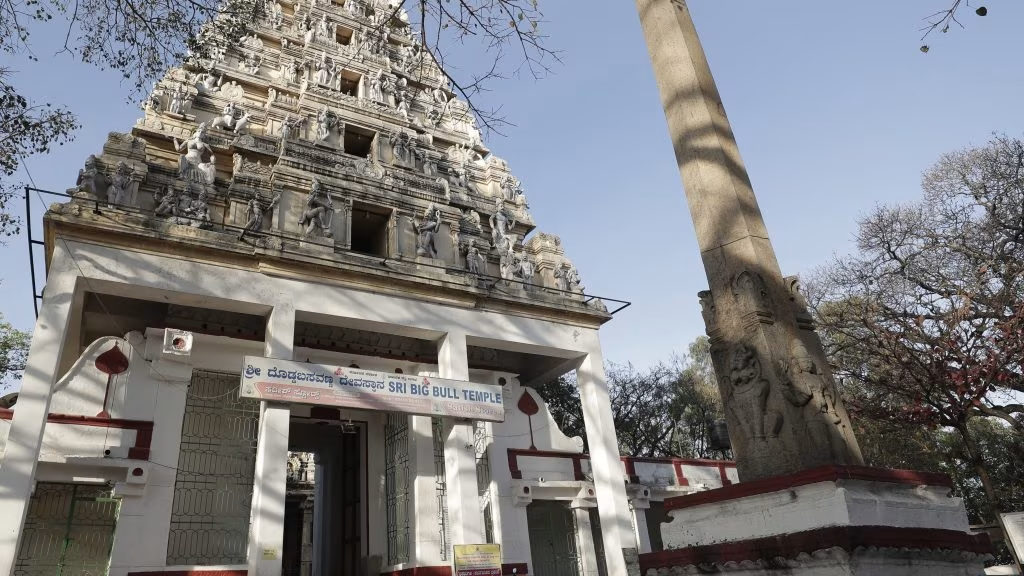
The Bull Temple is open daily from 6:00 AM to 8:00 PM. Entry is completely free, and there is no ticket counter or booking required. Visitors can simply walk in during temple hours and offer their prayers.
There is no provision for special or VIP darshan at the temple, so all visitors follow the same queue. Mornings tend to be quieter, while evenings see a steady flow of local devotees after work hours.
Best Time to Visit Bull Temple
The ideal time to visit is between October and February, when Bangalore’s weather is cool and pleasant. This makes it comfortable to explore the temple complex and nearby Bugle Rock Park without the midday heat or monsoon showers that are common during other months.
If you want a livelier experience, plan your visit during the Kadalekai Parishe in November or December, when the temple and surrounding streets come alive with fairs, food stalls, and crowds of visitors.
Kadalekai Parishe (Groundnut Fair)
The Kadalekai Parishe, or Groundnut Fair, is one of Bangalore’s most loved local festivals. It is held every year in the Hindu month of Karthika, usually falling in November or December, on the last two Mondays of the month.
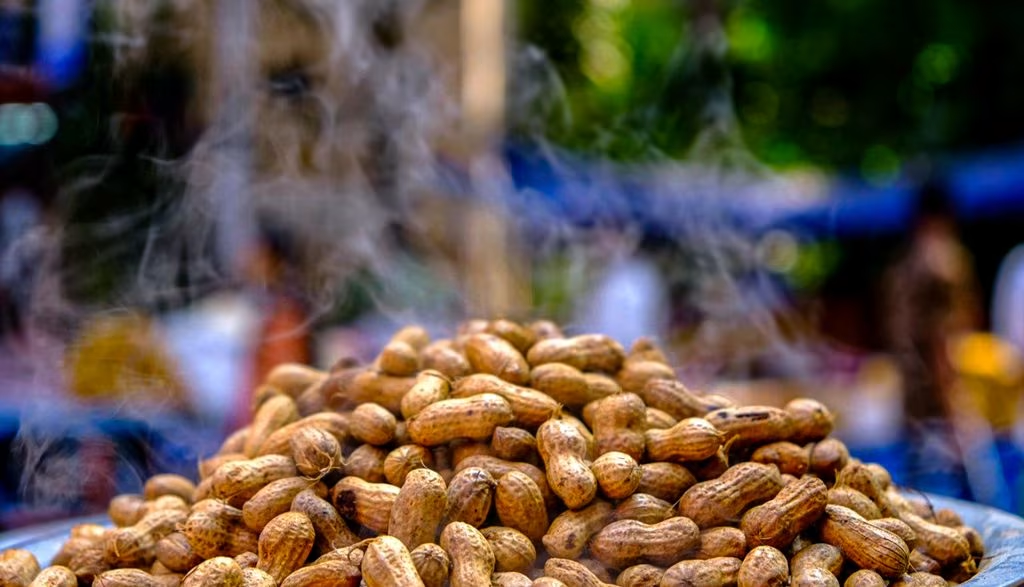
During the fair, farmers from across Karnataka bring fresh groundnuts to sell near the temple, continuing a tradition that dates back centuries. The streets leading up to the temple turn into a bustling marketplace filled with roasted and boiled groundnuts, traditional bangles, handicrafts, and street food.
Thousands of locals and tourists visit during this two-day fair to offer the season’s first groundnut harvest to Nandi before taking it home, a practice that connects directly back to the temple’s founding legend. Entry to the fair is free, and it remains one of the best times to experience Basavanagudi’s culture up close.
How to Reach Bull Temple
Bull Temple is located in Basavanagudi, a well-connected neighbourhood in South Bangalore. Here are the easiest ways to get there:
- By Metro: The nearest metro station is National College on the Green Line. From there, the temple is roughly a 15 to 20-minute auto ride away.
- By Bus: BMTC buses connect Basavanagudi to most parts of the city, and the Bull Temple Road bus stop is just a short walk from the entrance.
- By Car or Cab: The temple is about 7 km from Bangalore City Railway Station and around 35 to 40 km from Kempegowda International Airport, depending on traffic. Cabs and auto-rickshaws are easily available throughout the day.
- By Self-Drive: Limited parking is available near the temple, with additional space close to Bugle Rock Park.
Nearby Attractions
Basavanagudi is full of heritage sites, so it is worth setting aside extra time to explore the area around the temple.
- Dodda Ganapathi Temple: A short walk from Bull Temple, known for its large butter-coated Ganesha idol.
- Bugle Rock Park: A peaceful park built around ancient rock formations, ideal for a short walk after temple visits.
- Gandhi Bazaar: A lively traditional market famous for flowers, snacks, and South Indian filter coffee.
- Lalbagh Botanical Garden: One of Bangalore’s most popular gardens, located a short drive away.
Visitor Tips and Guidelines
- Dress modestly, as this is an active place of worship. Covering shoulders and knees is recommended.
- Remove footwear before entering the main temple area; stands are usually available outside.
- Photography is generally allowed in the outer courtyard, but always check with temple staff before photographing the inner sanctum.
- Visit early in the morning or after 6 PM to avoid crowds, especially on weekends.
- Carry small change if you wish to make a donation or offering.
- Combine your visit with Dodda Ganapathi Temple and Bugle Rock Park, since both are within walking distance.
- During the Kadalekai Parishe, expect heavy footfall and limited parking, so consider using public transport.
Conclusion
The Bull Temple is more than just one of Bangalore’s oldest temples; it is a place where history, faith, and local traditions come together. From its impressive monolithic Nandi statue and centuries-old Dravidian architecture to the vibrant Kadalekai Parishe festival, the temple offers a unique glimpse into the city’s cultural heritage.
Whether you’re seeking spiritual solace, exploring Bangalore’s historic landmarks, or simply enjoying a peaceful walk around Basavanagudi and Bugle Rock Park, the Bull Temple is a destination worth adding to your itinerary.
FAQs
1. What is the entry fee for Bull Temple, Bangalore?
There is no entry fee. The temple is free to visit for everyone.
2. What are the darshan timings of the Bull Temple?
The temple is open daily from 6:00 AM to 8:00 PM.
3. Who built the Bull Temple and when?
It was built in 1537 AD by Kempe Gowda I, the founder of Bangalore.
4. Why is it called Dodda Basavana Gudi?
Dodda Basavana Gudi means “Big Bull Temple” in Kannada, named after the giant Nandi statue housed inside.
5. What is Kadalekai Parishe, and when is it held?
It is the annual Groundnut Fair held near the temple, usually in November or December, during the Hindu month of Karthika.
6. Is photography allowed inside the Bull Temple?
Photography is generally allowed in the outer courtyard, but it is best to check with temple staff before photographing the inner sanctum.
7. How to reach the Bull Temple by metro?
Take the Green Line to National College Station, then a short auto-rickshaw ride to the temple.
8. What are the nearby temples and attractions?
Dodda Ganapathi Temple, Bugle Rock Park, Gandhi Bazaar, and Lalbagh Botanical Garden are all close by.
9. Is there parking available at Bull Temple?
Limited parking is available near the temple and around Bugle Rock Park, though space can be tight during festivals.
10. What is the best time to visit the Bull Temple?
October to February offers the most pleasant weather, though visiting Kadalekai Parishe in November or December gives a more festive experience.