Sacred Waters and Royal Legacies of the South
Just 23 km south of Mysuru lies Nanjangud, a town where timeless spirituality and history merge. The town rests along the serene banks of the Kapila River and locals revere Nanjangud as Dakshina Kashi, the Varanasi of the South. This historic town has thrived for over a millennium. The grand Srikanteshwara Temple is the main center of attraction here. Nature, folklore, and living traditions meet beautifully in this town, creating a divine experience that stays with you long after you leave.
The Sacred Etymology: Why Nanjangud?
The name Nanjangud carries a deep scriptural story. In Kannada, Nanju means poison and Eeshwara means Lord Shiva, while Gudu means abode in the local language. Literally, it translates to the abode of the poison-drinking Lord. The Shiva Purana hails this holy town as Sri Garalapuri. Lord Shiva consumed cosmic poison here during the cosmic ocean churning, an act that saved humanity from total destruction. His throat turned blue, earning him the name Srikanteshwara.
Nanjangud Location & How to Reach
- Location: Nanjangud Taluk, Mysuru District, Southern Karnataka.
- Nearest City: Mysuru (~23 km) | Bengaluru (~163 km)
- By Road: Nanjangud connects perfectly via National Highway NH-766. Frequent KSRTC buses operate from the Mysuru Sub-urban Bus Stand, and the total travel time is around 30 to 40 minutes.
- By Train: Nanjangud Town Railway Station connects to daily trains running via Mysuru and Bengaluru routes.
- By Air: The closest domestic airport is Mysuru Airport at Mandakalli, located just 15 km away from town. Kempegowda International Airport in Bengaluru is 200 km away.
Pro Tip: Drive down NH-766 from Mysuru during the early morning hours. The morning mist rolling off the Kapila River looks absolutely beautiful.
The Srikanteshwara Temple Complex
The Srikanteshwara Temple is situated right in the town center, resting gracefully on the banks of the Kapila River. This is one of the largest ancient temple complexes in Karnataka, sprawling over 50,000 square feet. Its architecture records the history of great South Indian ruling houses. The Ganga Dynasty built the innermost sanctum sanctorum in the ninth century. Chola and Hoysala kings expanded the central structural zones later, adding intricately carved stone pillars to the main anterior mandapa.
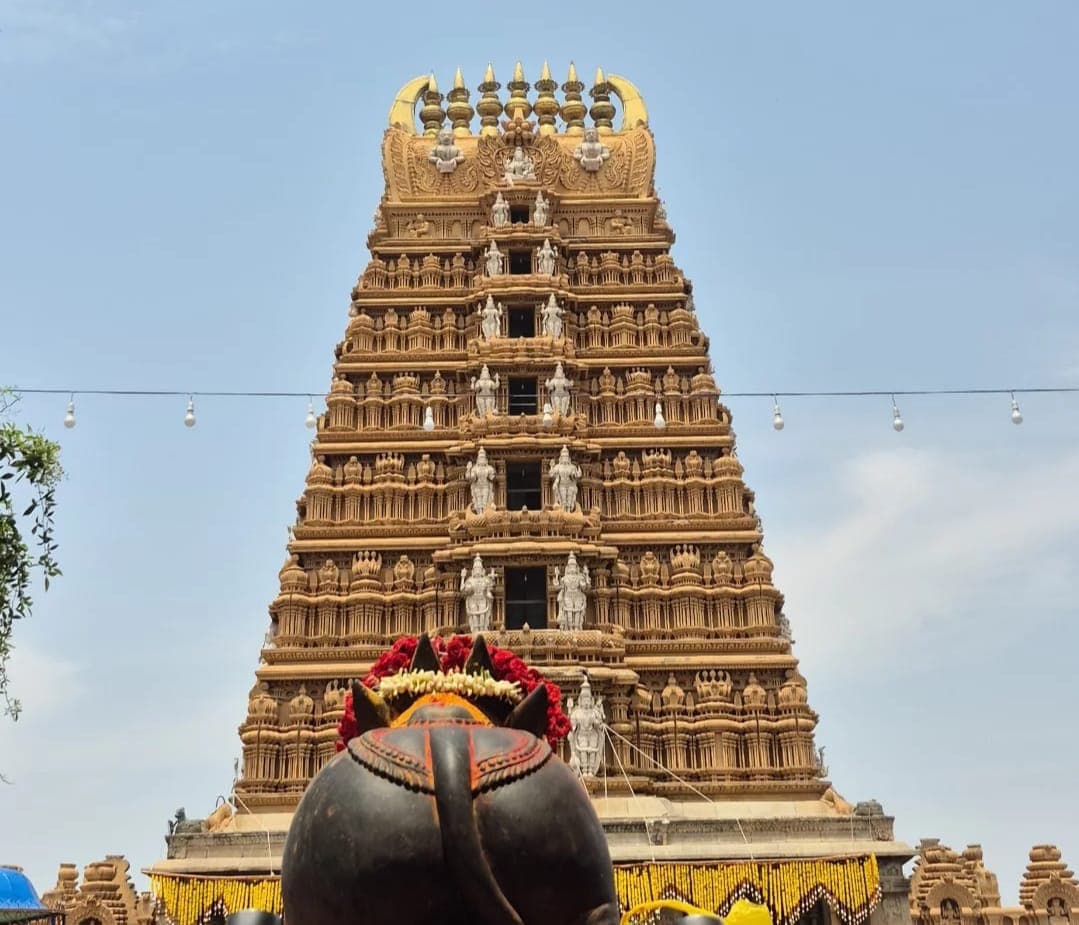
The Vijayanagara Empire added shrines for Goddess Parvati and Lord Narayana. The Wadiyars of Mysuru provided the grand finishing architectural strokes. Queen Devajammanni built the breathtaking gateway tower in 1845. This monumental gopuram stands tall at 120 feet with nine stories.
Essential Visitor Information
| Detail | Information |
| Temple Timings | Weekdays: 6:00 AM to 1:30 PM & 4:00 PM to 9:00 PM. Sundays: 6:00 AM to 10:00 PM continuously. |
| Dress Code | Wear traditional and conservative attire. Men must remove shirts before entering the inner courtyard. |
| Entry Fee | General entry is completely free for all. Nominal charges apply for special quick-darshan lines. |
| Prasadam | Free community lunch is served daily. It is available at the temple dining hall. |
| Mobile Network | Excellent mobile connectivity exists across the town. |
| Nearest ATM | Multiple bank ATMs are available outside the temple. |
The town hosts massive crowds during weekends and festivals. Visitors must maintain cleanliness along the river bathing ghats and respect the ancient heritage structures of the town. Photography is strictly banned inside the active worship zones.
Best Time to Visit Nanjangud
- Peak Season – October to March: The weather is cool and pleasant during these months. Walking between different heritage sites is highly comfortable. Major local festivals fall within this winter window.
- The Chariot Festivals (Dodda Jathre): The primary festival occurs around March or April every year, while a smaller chariot festival happens during November or December. Thousands of devotees pull five massive wooden chariots down the streets.
- Monsoon – July to September: The Kapila River flows at its most dramatic volume. River currents become highly dangerous during heavy rains, so ritual dips are restricted to designated safe concrete steps.
Places to Visit In & Around Nanjangud
1. The Srikanteshwara Shiva Temple
This is the central spiritual anchor for all incoming travelers. The monumental temple stands proudly right in the town center, and every major road and cultural path connects to this site.
2. Parashurama Kshetra & The Sangam
This site is located 1.5 km from the Shiva temple and marks the confluence of the Kapila and Kaundinya rivers. Sage Parashurama performed rigorous penance at this scenic spot. His axe accidentally struck a hidden stone Shivalinga here. He applied wet river mud to heal the bleeding stone. Lord Shiva wiped away his sins after this deep devotion, and a dedicated Parashurama Temple stands at this confluence today.
3. Sri Raghavendra Swamy Mutt
This monastery stands to the right of the Shiva temple and belongs to the famous Dvaita Vedanta spiritual tradition. The mutt has been stationed here since the nineteenth century and holds rare Sanskrit palm-leaf manuscripts and copper-plate inscriptions.
4. The Historic Kabini Bridge
This magnificent bridge was constructed around 1735 by Dalavayi Devaraja. It is one of the oldest operational masonry bridges in India. The structure features beautiful Gothic arches made of sturdy stone, blending old European design with traditional Indian engineering styles.
Local Delicacies & The GI-Tagged Heritage
The culinary profile of Nanjangud belongs to the Mysore region, and sampling the native flavors is a must-do for food lovers.
- Nanjangud Rasabale (GI Tag No. 35): The town is the birthplace of this legendary banana variety. It enjoys official Geographical Indication protection status under Indian law. The fruit grows only in the local black saline alluvial soil deposited exclusively along the Kapila River banks. It has a buttery-soft texture and a sweet-and-sour flavor.
- Traditional Temple Dasoha Meals: Free mid-day prasadam is served daily inside the temple. It features hot rice, aromatic spiced sambar, and sour rasam, accompanied by a traditional sweet dish.
- Mylari-style Dose: Local breakfast joints serve an exceptionally soft version of this dish. This cloud-like dosa comes with fresh white butter and a spiced potato-onion palya.
- The Mysore Betel Leaf (GI Tag No. 36): Locally known as Chigurele, these leaves grow extensively here. They possess a smooth texture and a non-pungent flavor. Enjoying a local stuffed sweet paan is a popular tradition.
Tips & Safety Guidelines for Travelers
- Start Early: Arrive by 7:30 AM to beat the long lines. This lets you experience quiet morning river rituals easily.
- The Legend of Hakim Nanjunda: An emerald-green Shivalinga sits inside the main temple. Tipu Sultan prayed here to cure his favorite royal elephant. The elephant’s eye ailment was fully cured by holy water. The Sultan named the deity Hakim Nanjunda, meaning Physician Lord, and gifted a precious emerald necklace to the deity.
- Respect the River: The riverbed has unpredictable drop-offs and slippery clay. Restrict your holy splash to the concrete bathing steps.
- Carry Cash: Digital UPI payments work well across most local shops. Keep physical cash for temple seva tickets and auto fares.
Where History and Faith Converge
Nanjangud rewards travelers who seek genuine cultural roots. The town lies deep within the fertile heartland of Karnataka, offering something quiet, real, and truly unforgettable to everyone. Ancient chants echo continuously through multi-dynastic stone pillars while native fruits thrive on the rich river mud nearby. Nanjangud stands as a living monument to Karnataka’s soul.
FAQs
Where is the Nanjangud Shiva Temple located exactly?
The Srikanteshwara Temple stands in the Nanjangud town center, situated on the right bank of the Kapila River.
Why is Nanjangud called Dakshina Kashi?
It sits on the sacred Kapila River like Varanasi sits on the Ganges. Both house ancient, highly revered Shiva temples of equal spiritual value.
What is unique about the Nanjangud Rasabale banana?
It is a unique GI-tagged banana variety native to this town. The local saline soil gives it a distinct sweet-and-sour taste.
How far is Nanjangud from the nearest airport?
Mysuru Airport is the closest domestic terminal at 15 km away, while Bengaluru International Airport is located about 200 km away.