Introduction
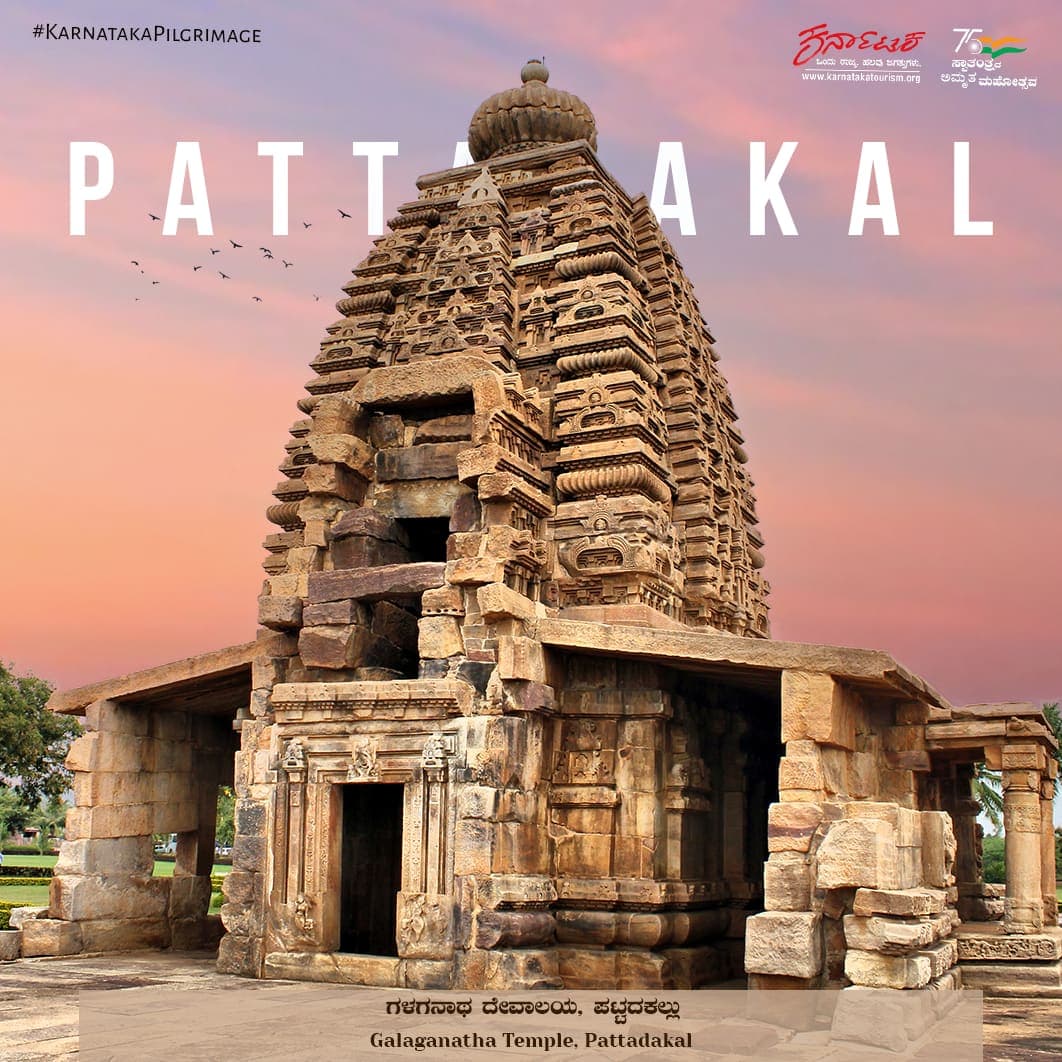
The Galaganatha Temple at Pattadakal stands out as one of the few temples in the complex built in the Nagara style of architecture—a rare sight in southern India. Dating back to the 8th century during the reign of the Chalukyas, this temple is dedicated to Lord Shiva and offers a unique contrast to the primarily Dravidian-style structures surrounding it.
Located near the banks of the Malaprabha River, the temple reflects the Chalukyas’ experimentation and openness to architectural diversity. Though partially in ruins, it remains a compelling destination for those interested in ancient Indian temple design and iconography.
Architectural Highlights
The Galaganatha Temple follows the Nagara style, recognizable by its curvilinear shikhara (superstructure). The temple sits on a raised platform and has a sanctum, a vestibule, and a small mandapa (hall), many parts of which have been weathered over time.
Inside, the sanctum once enshrined a Shiva Linga, reaffirming its dedication to Lord Shiva. A notable feature is the beautifully carved panel depicting Shiva slaying the demon Andhaka, a classic iconographic theme symbolizing the victory of divine wisdom over ignorance and ego.
Though smaller than others in the complex, Galaganatha’s artistic value lies in its stylistic variety and its ability to showcase a northern influence in a predominantly southern temple landscape.
Spiritual & Cultural Significance
The Galaganatha Temple, while less visited than its neighbors like Virupaksha or Mallikarjuna, contributes richly to the composite cultural fabric of Pattadakal. Its existence in this UNESCO World Heritage Site underlines Pattadakal’s status as a melting pot of regional architectural forms—a place where styles converged to create timeless legacies.
For scholars, photographers, and spiritual seekers, Galaganatha offers a tranquil setting paired with deep historical resonance. Its relatively quieter ambiance compared to other temples in the complex makes it ideal for contemplation and architectural appreciation.
Why Visit?
- See a rare example of Nagara architecture in South India
- Appreciate detailed stone reliefs of Shiva in dynamic mythological forms
- Explore the temple’s setting along the serene Malaprabha River
- Understand the fusion of regional influences under Chalukyan rule