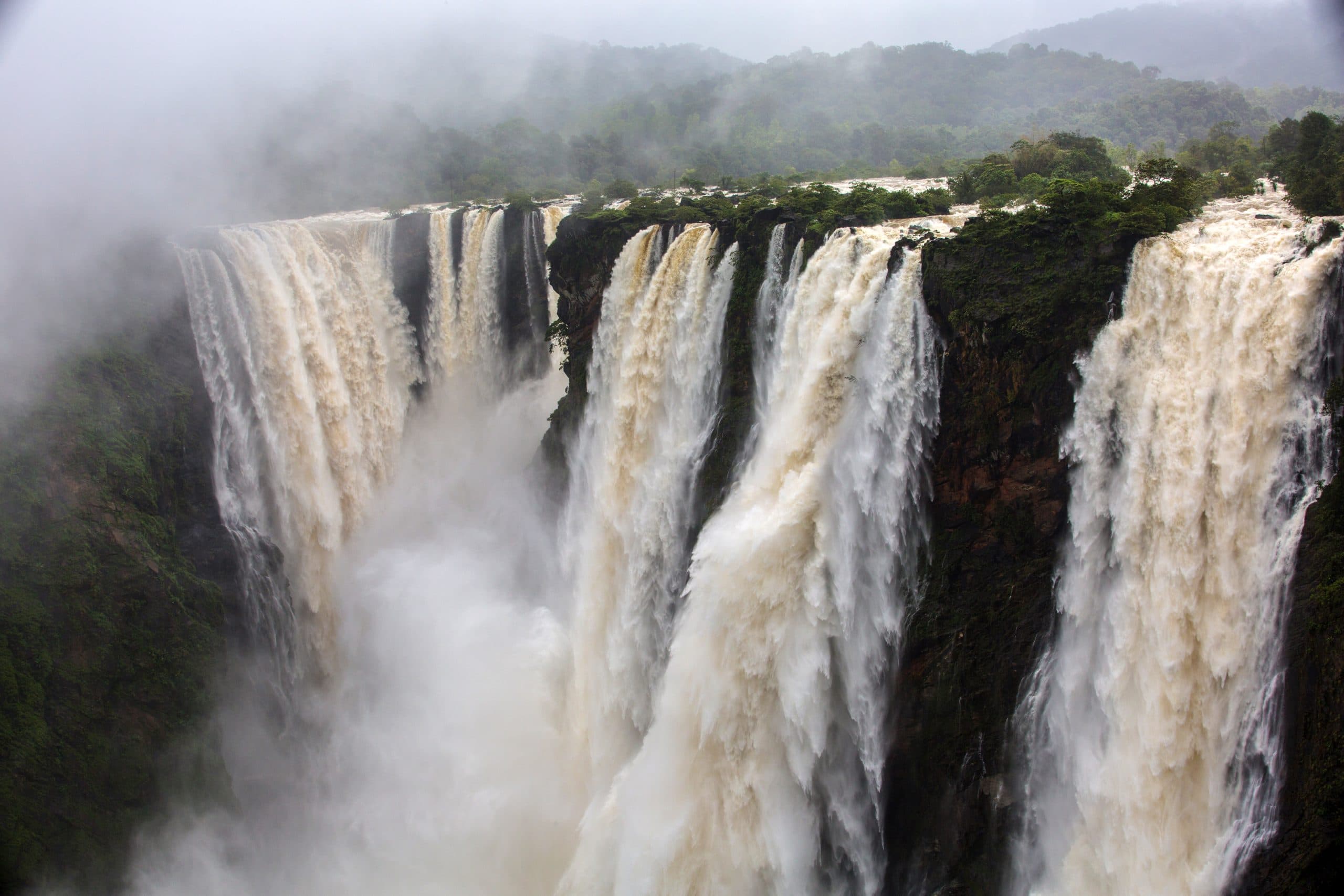
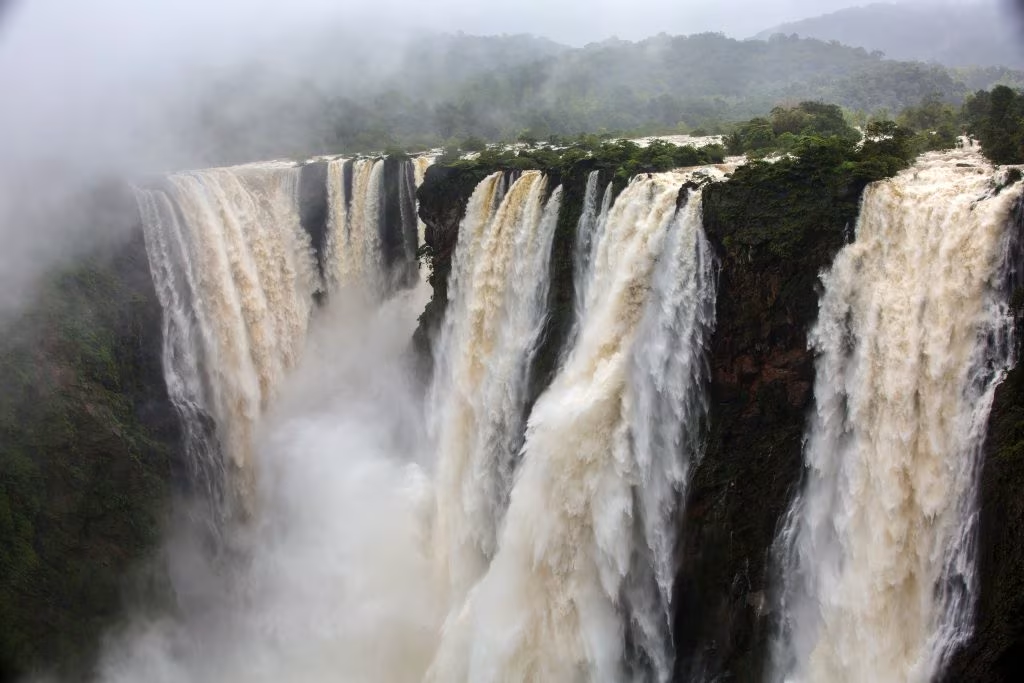
Within the dense evergreen forests of the Western Ghats, Jog Falls is one of India’s most breathtaking natural wonders. Formed by the Sharavathi River plunging from a sheer cliff 253 metres (830 feet), it is India’s second-highest plunge waterfall and one of the tallest in Asia. Unlike tiered waterfalls, Jog Falls drops in a single dramatic, unbroken free fall, dividing into four distinct cascades before crashing into a deep gorge below.
Whether you are a nature lover, a photographer, an adventure enthusiast, or a history buff, Jog Falls, locally known as Jogada Gundi or Gerusoppa Falls, delivers an experience that is nothing short of spectacular.
Quick Facts
| Quick Facts | Details |
| River | Sharavathi River |
| Height | 253 metres (830 feet) |
| Number of Cascades | 4 (Raja, Rani, Roarer, Rocket) |
| Location | Sagar Taluk, Shivamogga District, Karnataka |
| Jog Falls visiting time | 7:30 AM – 9:30 PM (daily) |
| Entry Fee | ₹20 per person (Indians); ₹100 (Foreign Nationals); ₹10 (Students 6–16 yrs) |
| Best Time to Visit | August to December |
| Jog Falls from Bangalore | ~400 km (approx. 8–9 hours by road) |
| District | Shivamogga (Shimoga) |
| Nearest Town | Sagara (~30 km) |
The Four Cascades of Jog Falls
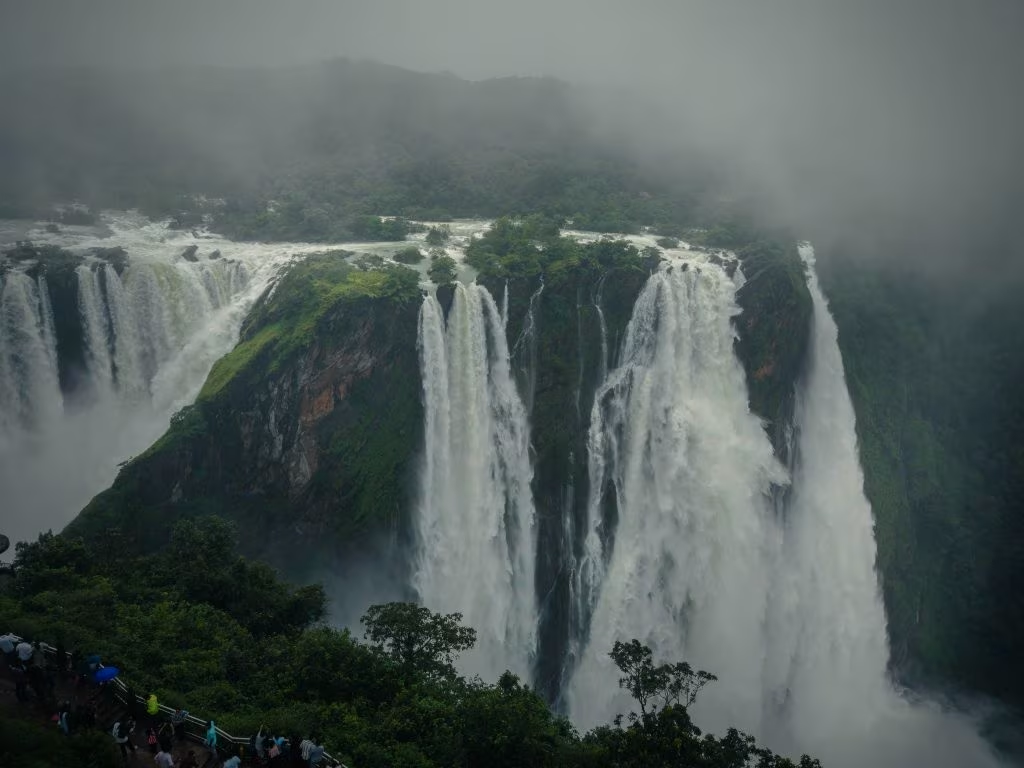
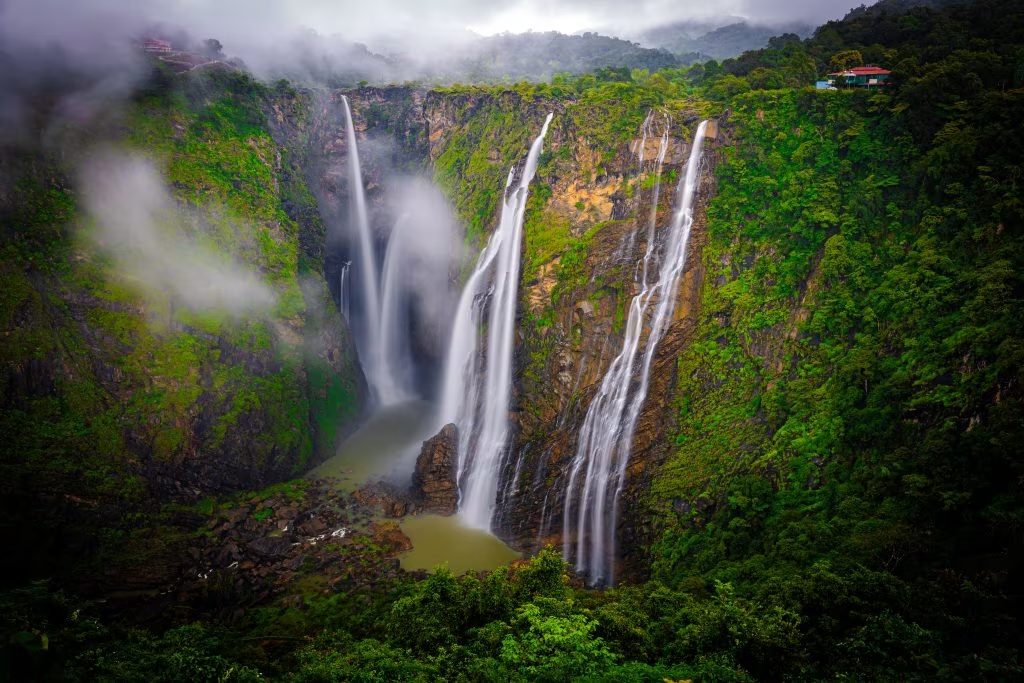
What makes Jog Falls truly unique is not just its height, but the personality of each of its four individual streams. Together they form one of India’s most iconic waterfalls, but each cascade has its own character:
1. Raja (The King)
The most powerful and majestic of all four, Raja cascades in a single unbroken column from a height of approximately 250 metres, a straight, thundering plunge that commands awe. Its sheer volume and force during the monsoon season earned it the title of ‘King.’ Also called the Horseshoe cascade due to the shape of its cliff, Raja is the visual anchor of the falls.
2. Roarer
True to its name, Roarer is the noisiest of the four. It gushes and tumbles violently down the cliff face, confronting the Raja cascade halfway in its descent with a thunderous collision. The resulting turbulence and roar can be heard from considerable distances, especially during peak monsoon flow.
3. Rocket
The Rocket cascade shoots downward in a series of forceful jets, like water bursting from a pressure valve. Fast and energetic, it is the most dynamic visually, zigzagging its way down the rock face before merging with the other cascades at the base.
4. Rani (The Queen)
Graceful and elegant, Rani flows gently along the mountainside in a foamy, lace-like curtain. In contrast to the raw power of Raja, Rani is calm and quiet, hence her name. She is sometimes called La Dame Blanche (The White Lady) by early explorers, an ode to her ethereal, flowing form.
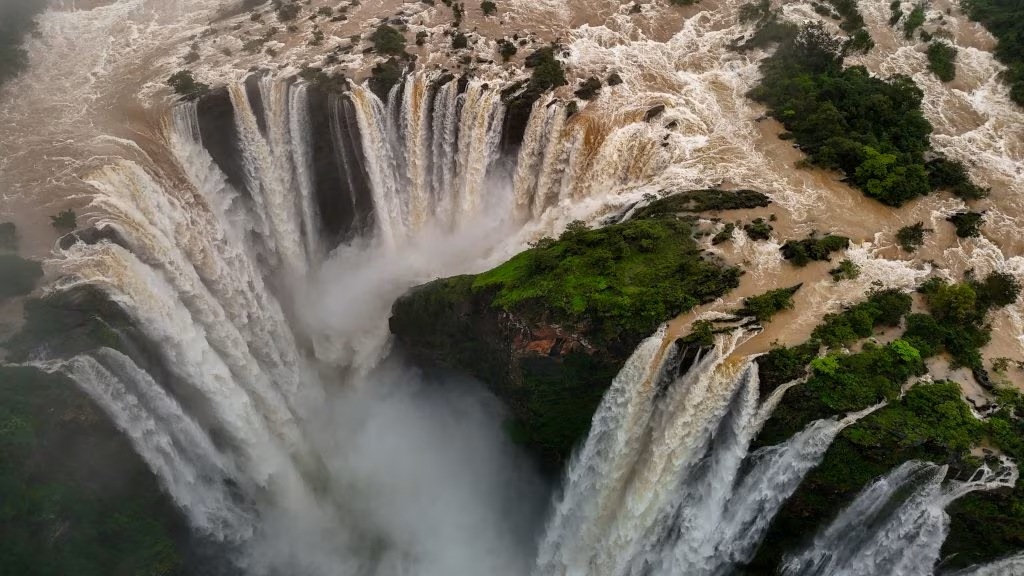
During peak monsoon months, when the Linganamakki Dam upstream releases sufficient water, all four cascades merge into a single roaring torrent, transforming Jog Falls into a true plunge waterfall of extraordinary force and grandeur.
Best Time to Visit Jog Falls
Monsoon Season (June to September)- Jog Falls best time to visit
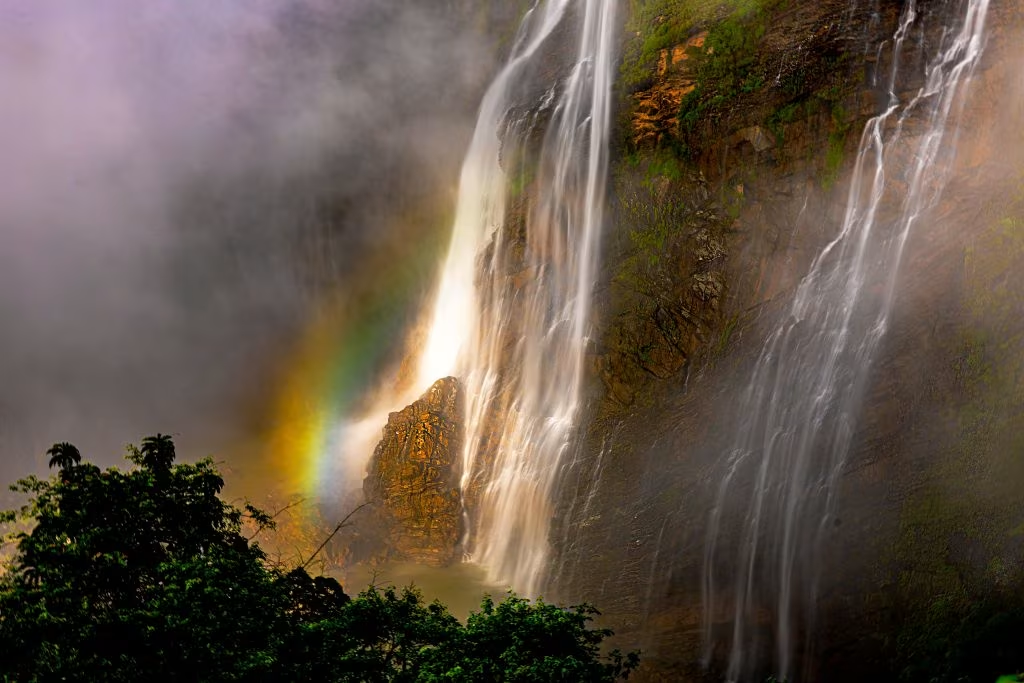
This is when Jog Falls is at its most dramatic. Rainbows frequently appear over the gorge during breaks in the rain. However, the viewing platform can get slippery, dense mist sometimes obscures the full view, and the trek to the base is restricted for safety. If you want sheer power and spectacle, this is the time to come.
| Season | Months | Water Flow | Suitability |
| Monsoon | June – September | Maximum | Spectacular views; base trek restricted |
| Post-Monsoon | October – December | High | Best overall; trekking open |
| Winter | January – February | Moderate | Peaceful; ideal for photography |
| Summer | March – May | Low | Less impressive; hot weather |
Viewpoints at Jog Falls
Main Viewing Deck (Front Panoramic Viewpoint)
Located on the Jog-Kargal side in Sagar Taluk, this is the primary viewpoint for most visitors. The Karnataka Tourism Department has constructed a well-maintained viewing deck with a strategic position that offers a full panoramic view of all four cascades. It is the most accessible spot and is ideal for photography and family visits. The new viewing tower, inaugurated in 2025, adds a further elevated perspective.
British Bungalow Viewpoint
Situated across the gorge on the Siddapur Taluk side in Uttara Kannada, this colonial-era vantage point was historically used by British officials. It offers a slightly different angle of the falls and commands sweeping views of the surrounding forested gorge. The drive to this side is scenic in itself.
Watkins Platform
Named after a British engineer who helped develop the early hydroelectric works, the Watkins Platform sits near the base of the falls and is one of the most thrilling spots to experience Jog Falls viewpoint up close. The mist, the sound, and the sheer proximity to the cascades make this a photographer’s favourite. Access is subject to seasonal water levels and safety guidelines.
Trek to the Base
For the most immersive experience, a steep trek of approximately 1,400 steps descends to the base of the falls. The trek is moderately difficult and takes around 45 minutes to an hour each way. At the bottom, visitors can feel the cool mist on their skin and witness the full scale of the cascades from below. Note: Access to the 1,400-step trek down to the base is frequently restricted year-round by the Jog Management Authority for visitor safety (due to slippery steps, rockfall hazards, and sudden water releases from upstream dams). Always check on-site operational status before attempting the descent.
How to Reach Jog Falls
By Road:
Road travel is the most popular and convenient way to reach Jog Falls. The falls are well connected to major Karnataka cities:
- From Bangalore: ~400 km via NH 75 to Hassan, then towards Shimoga and Sagara. Journey time approximately 8–9 hours. Direct KSRTC and private buses are available from Kempegowda Bus Terminal (Majestic).
- From Mangalore: ~217 km via NH 169 through Udupi and Kundapur, then inland towards Sagara. Approximately 5–6 hours by road.
- From Shimoga (Shivamogga): ~106 km, approximately 2.5 – 3 hours. Local buses ply regularly.
- From Hubli: ~161 km via Sirsi, approximately 3.5–4 hours.
- From Sagara: ~30 km, approximately 45 minutes. Sagara is the nearest major town and the best base for visiting.
By Train:
The nearest railway station is Talaguppa, approximately 13–18 km from Jog Falls, on the Shimoga–Talaguppa narrow gauge line. From Talaguppa, autos and taxis are available to the falls. Shimoga Town Railway Station (~106 km) is better connected to major cities; from there, take a bus or taxi to the falls.
By Air:
The nearest airports are Hubballi Airport (~159 km) and Mangalore International Airport (~217 km). From either airport, the best option is to hire a taxi or take a bus to Sagara and then proceed to the falls.
Things to Do at Jog Falls
Waterfall Viewing & Photography
The primary draw is, of course, witnessing the majestic cascades from multiple viewpoints. Early morning visits reward photographers with soft light and rising mist that creates a magical, ethereal atmosphere. The falls are most photogenic during post-monsoon months when visibility is high, and the water is at full force.
Trekking to the Base
The descent via ~1,400 steps to the base of the falls is one of the most exhilarating activities at Jog Falls. The trail winds through dense forest with intermittent views of the cascades. At the bottom, visitors can stand close to the falls and experience the sheer power of the water firsthand. Wear sturdy shoes and carry water.
River Rafting & Water Sports
The Sharavathi Adventure Camp, operated by Jungle Lodges and Resorts, just 6 km from the falls, organises river rafting, kayaking, coracle rides, and boating. These activities are typically available in the post-monsoon season and offer a thrilling way to engage with the river and its surrounding landscape.
Birdwatching
Jog Falls sits within the Sharavathi Valley Wildlife Sanctuary, a 431 sq km protected area that is a haven for birdwatchers. The forests around the falls host both resident and migratory species, including the Malabar pied hornbill, Malabar giant squirrel, grey jungle fowl, plum-headed parakeet, and many more. Early morning is the best time for birdwatching.
Wildlife & Nature Exploration
The Sharavathi Valley Wildlife Sanctuary surrounding the falls is home to tigers, leopards, sloth bears, Indian gaur, crocodiles, and the Malabar giant squirrel. Guided safaris and nature walks within the sanctuary offer a deeper engagement with the Western Ghats ecosystem.
Visit Linganamakki Dam
Located just 10–12 km from the falls, the Linganamakki Dam is a massive earthen dam built across the Sharavathi River. The reservoir offers stunning views of still water against forested hills and is a peaceful complement to the energy of the falls.
Jog Falls Nearby Places
| Place | Distance | What to Do / See |
| Linganamakki Dam | ~12 km | Reservoir views, hydroelectric project, scenic drives |
| Honnemaradu | ~26 km | Kayaking, camping, backwaters of Linganamakki Reservoir |
| Keladi | ~36 km | Rameshwara Temple, Keladi Dynasty museum, and historical heritage |
| Sigandur | ~40–50 km | Sigandur Chowdeshwari Temple, scenic boat ride, riverside darshan |
| Unchalli Falls (Lushington Falls) | ~40 km | A lesser-visited plunge waterfall in dense jungle, trekking |
| Shimoga (Shivamogga) | ~106 km | Tyavarekoppa Lion & Tiger Reserve, Sakrebyle Elephant Camp |
| Murudeshwar | ~95 km | Shiva statue, beach, Murudeshwar Temple, coastal views |
| Gokarna | ~122 km | Sacred beaches, Mahabaleshwar Temple, Om Beach |
History & Significance of Jog Falls
The story of Jog Falls stretches back centuries, intertwining mythology, royal discovery, colonial exploration, and modern engineering.
According to Hindu legend, Lord Rama, Goddess Sita, and Lakshmana visited the area during their forest exile, and the falls are said to have been a source of wonder even in those ancient times. Local communities considered the surrounding forest sacred.
Historical records attribute the discovery of the falls to Raja Keladi Shivappa Nayaka., a ruler of the Keladi Nayaka Dynasty in the 16th century. Upon first beholding the falls, he is said to have been so captivated by their grandeur that he named the site ‘Jog’, a Kannada word meaning ‘falls’ or ‘cascade.’ The Keladi Dynasty controlled much of the Malnad region of Karnataka, and the falls came under their dominion as the dynasty expanded its territory through the Western Ghats.
In the modern era, Jog Falls became central to Karnataka’s hydroelectric ambitions. The Mahatma Gandhi Hydro-Electric Project (formerly the Krishna Rajendra Hydro-Electric Project), operational since 1948, harnessed the power of the Sharavathi River with the Linganamakki Dam constructed in 1964. While the dam significantly boosted electricity generation for the state, it also reduced the natural flow of the falls during non-monsoon months, a trade-off that continues to be discussed by conservationists and planners.
Where to Stay Near Jog Falls
Accommodation options range from government-run guesthouses to nature camps and mid-range hotels, most clustered in Jog Falls town, Sagara, or along the Linganamakki backwaters.
Hotels in Sagara: The nearby town of Sagara (~30 km) offers a wider range of hotels, lodges, and guesthouses to suit various budgets, along with better access to restaurants and transport connections.
Essential Visitor Information
| Visitor Information | Details |
| Visiting Hours | 7:30 AM – 9:30 PM (all days of the week) |
| Entry Fee | ₹20 (Indians) | ₹100 (Foreign Nationals) | ₹10 (Students 6–16 yrs) |
| Parking Fee | Two-wheeler: ₹30 | Auto: ₹40 | Car/Tempo Traveller: ₹150 | Bus: ₹20 |
| Photography | Personal camera: ₹100 | Drone camera: ₹500 |
| Trek to Base | Permitted (except during heavy monsoon); ~1,400 steps; 45–60 min each way |
| Time Limit Per Visit | Max 2 hours per entry (regulated crowd management) |
| Monsoon Safety | Slippery paths; base trek restricted; wear non-slip footwear |
| What to Carry | Water, snacks, rain jacket (monsoon), sturdy closed shoes, camera |
| Phone Network | Signal can be patchy; BSNL has the widest rural coverage in the area |
| Food Options | Local stalls and small eateries near the entrance; limited restaurant options |
| Medical Facilities | Basic first aid available on site; nearest hospital in Sagara (~30 km) |
Conclusion
Jog Falls is more than just a waterfall; it is a testament to the raw, untamed beauty of Karnataka’s Western Ghats. From the thundering Raja cascade to the graceful Rani, from the rich history of the Keladi Dynasty to the hum of a hydroelectric project that has powered the state for over seven decades, every aspect of Jog Falls tells a story. Whether you visit in the misty height of monsoon or the clear skies of December, the falls deliver an experience that stays with you long after the sound of the water fades.
Plan your visit, pack your camera, and let the Sharavathi River’s jog take your breath away.
FAQ
1. Which river forms Jog Falls?
Jog Falls is formed by the Sharavathi River, which originates at Ambuthirtha in Thirthahalli Taluk in the Shivamogga district. The river flows north-westward through the Western Ghats, drops 253 metres (830 ft) to create Jog Falls, and eventually discharges into the Arabian Sea at Honnavar in Uttara Kannada district.
2. What are the visiting hours of Jog Falls?
Jog Falls is open to visitors daily from 7:30 AM to 9:30 PM throughout the year. As of 2025, each visitor is allowed a maximum of 2 hours per entry to regulate crowd movement. The falls are accessible every day of the week with no weekly closures.
3. What is the best time to visit Jog Falls?
The best time to visit Jog Falls is between August and December. The post-monsoon window of October to December is ideal: all four cascades are in full flow, the skies are clear for good visibility, the weather is pleasant, and the base trek is accessible. Winter (January–February) is also a good time for a quieter, photography-focused visit.
4. How far is Jog Falls from Bangalore?
Jog Falls is approximately 400 kilometres from Bangalore by road. The most common route goes via NH 75 to Hassan, then towards Shimoga (Shivamogga) and Sagara, from where the falls are about 30 km away. The drive typically takes 8–9 hours. Direct overnight KSRTC and private buses from Bangalore (Kempegowda Bus Terminal) also serve this route.
5. Can you visit Jog Falls in summer?
Yes, Jog Falls can be visited in summer (March to May), but it is the least recommended season. Temperatures can also be uncomfortably hot. If your visit coincides with summer, plan an early-morning trip to take advantage of cooler conditions.
6. What are the four cascades of Jog Falls?
The four cascades of Jog Falls are: Raja (the most powerful, drops in a single unbroken column), Rani (graceful and quiet, flows in a foamy curtain), Roarer (violent and thunderous, confronts the Raja cascade mid-fall), and Rocket (energetic and jet-like, shoots down in a series of forceful spurts). Each cascade has a distinct personality, and all four merge at the base during peak monsoon.
7. What are the nearest places to visit from Jog Falls?
Key nearby attractions include Linganamakki Dam (~12 km) for reservoir views, Honnemaradu (~26 km) for kayaking and camping on Linganamakki backwaters, Keladi (~36 km) for its historic Keladi Dynasty temple and museum.
8. How to reach Jog Falls from Mangalore?
From Mangalore, Jog Falls is approximately 217 km away and takes around 5–6 hours by road. The most common route is via NH 169 (Mangalore–Udupi–Kundapur), then taking a diversion inland through Shirali/Honnavar to reach Sagara, from where the falls are 30 km away.
9. Is trekking to the base of Jog Falls allowed?
Yes, trekking to the base of Jog Falls is permitted, though access is seasonal. During the monsoon season (July–September), the trek is typically restricted due to dangerously high water levels and extremely slippery conditions.
10. What is the entry fee for Jog Falls?
The entry fee for Indian nationals is ₹20 per person. Foreign nationals are charged ₹100 per person. Students aged 6 to 16 years are admitted at a concessional fee of ₹10. Parking charges are separate: ₹30 for two-wheelers, ₹40 for auto-rickshaws, ₹150 for cars and tempo travellers, and ₹20 for buses. Camera charges apply: ₹100 for personal cameras and ₹500 for drone cameras.