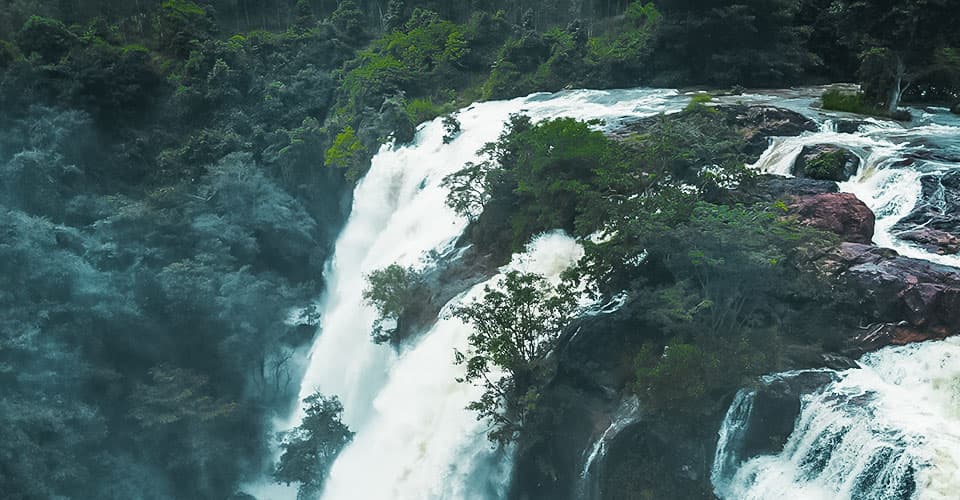
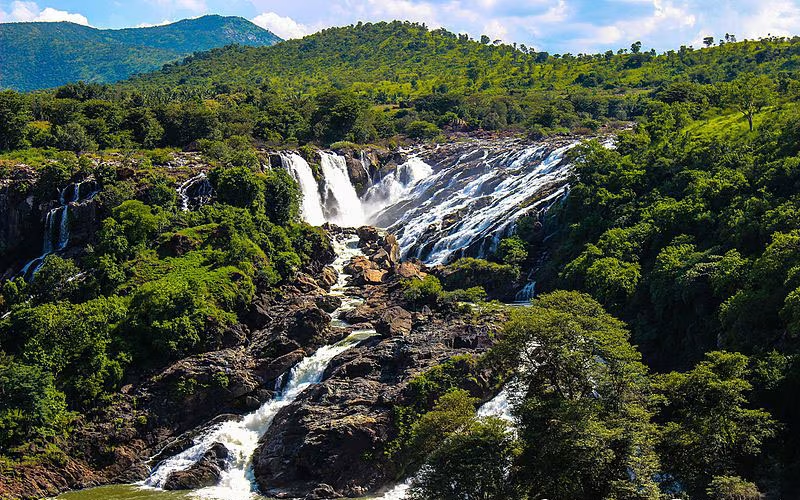
Long before you see it, you hear it, a low, relentless roar rising from the gorge where the Kaveri splits apart and plunges into the twin cascades that Karnataka calls Shivana Samudram Waterfalls, Lord Shiva’s Sea. The two falls- Gaganachukki and Barachukki, together form one of South India’s most breathtaking natural spectacles, set against the dense forests of the Cauvery Wildlife Sanctuary in Mandya District.
Quick Facts
| Quick Facts | Details |
| River | Kaveri (Cauvery) |
| Height | Gaganachukki: 90 m (295 ft) | Barachukki: 69 m (226 ft) | Overall: 98 m (322 ft) avg |
| Number of Cascades | Two- Gaganachukki (western branch) & Barachukki (eastern branch) |
| Location | Malavalli Taluk, Mandya District, Karnataka |
| Visiting Hours | Barachukki: 8:00 AM – 5:00 PM | Gaganachukki: Open all day (daytime recommended) |
| Entry Fee | No entry fee for viewpoints. Viewpoint enclosure at Barachukki: ₹10/person. Vehicle parking: ₹50 |
| Best Time to Visit | July – October (monsoon peak); September – January (ideal weather + good flow) |
| Distance from Bangalore | ~130–139 km (approx. 3–4 hours by road) |
| Distance from Mysore | ~80 km (approx. 2 hours by road) |
| District | Mandya District, Karnataka |
| Nearest Town | Malavalli (for Gaganachukki); Kollegala (for Barachukki) |
Gaganachukki vs. Barachukki: Understanding the Twin Falls
Shivanasamudra, also known as Sri Shivanasamudra Waterfalls, is not a single waterfall; it is a spectacular natural phenomenon born from geography. As the Kaveri River descends from the Deccan Plateau and reaches the island town of Shivanasamudra, it splits into two distinct branches that carve through deep ravines on either side of the island before plunging, a few kilometres apart, into two separate falls.
Together, these twin falls rank among the top 100 waterfalls in the world and have been listed in the World Waterfall Database’s global rankings.
Gaganachukki Falls (Western Branch)
Gaganachukki, meaning ‘sparrow of the sky,’ is the taller and more dramatic of the two falls, plunging approximately 90 metres. Shaped like a colossal horsetail, the western branch crashes down through a rocky gorge with tremendous force, creating a thunderous roar and a perpetual mist that can be felt from the viewpoints above. The gorge here is deep, and access to the base is restricted. Visitors observe this fall from above, which itself delivers extraordinary panoramic views. Gaganachukki is also the site of Asia’s first hydroelectric power station, adding a historic layer to its natural grandeur.
Barachukki Falls (Eastern Branch)
Barachukki translates to ‘large sparrow’ and falls from a height of about 69 metres. Unlike its counterpart, Barachukki is a cascading waterfall, wide, multi-tiered, and spread across a broad rocky shelf. It is often considered the more visitor-friendly of the two: a well-maintained stairway with railings leads down approximately 200 steps toward the falls, and there is a section, accessible only outside monsoon season, where visitors can stand under the lighter flow and wade in the shallows. Coracle rides are also available near Barachukki. This fall lies administratively within the Kollegala area of Chamarajanagara district, while Gaganachukki falls under Malavalli Taluk, Mandya District.
Note: Due to past fatal accidents, treacherous whirlpools, and sudden water releases, swimming, wading under the falls, and coracle rides at the base of Barachukki have been strictly banned/restricted by the local administration and police authorities. Visitors must view the falls safely from designated viewing platforms.
Key distinction: Though geographically adjacent, the viewpoints for the two falls are about 15–20 minutes apart by road. Plan your visit to cover both.
Viewpoints at Shivanasamudra
There are multiple Shivanasamudra waterfalls viewpoint locations offering different perspectives.
1. Shivanasamudra Watchtower (Gaganachukki)
The principal viewpoint for Gaganachukki is a watchtower that delivers a sweeping elevated view of the horseshoe-shaped cascade. This is where most visitors photograph the falls. The area around the watchtower is fenced, and safety warnings advise against climbing down the barrier, a precaution taken seriously given the strength of the current.
2. Dargah / Hazrath Mardane Gaib Viewpoint (Gaganachukki)
A second approach to Gaganachukki passes through the Dargah of Hazrath Mardane Gaib. From this vantage point, visitors get a striking view of the right branch of the falls at a different angle. This is a less-crowded alternative and is considered by many to be the more scenic approach, particularly during the monsoon. The dargah itself adds a quiet, contemplative character to the visit.
3. Upstream Viewpoint (Near Barachukki Gate)
Before reaching the main Barachukki entrance gate, a left turn leads to a lesser-known viewpoint that looks across the upstream end of Gaganachukki. During the monsoon, when the river swells, this perspective of water rushing toward the precipice can be especially dramatic.
4. Barachukki Descent Viewpoints
The stairway down to Barachukki offers multiple resting platforms at descending levels, each with increasingly immersive views of the cascading fall. At the bottom (outside monsoon season), the spray and the sound of water are all-enveloping. This is the only spot at Shivanasamudra where visitors can stand in the water safely during dry months.
Best Time to Visit Shivanasamudra Waterfalls
The Shivanasamudra falls visiting time depends on the season, with monsoon offering the most powerful views.
July-October (Monsoon – Peak Flow):
Most powerful and dramatic. Heavy water flow, lush greenery, and misty views. Downsides: crowds, slippery paths, and no coracle rides or wading.
September-January (Post-Monsoon & Winter – Best Time):
Ideal balance of strong flow and pleasant weather. Clear skies, fewer crowds, and activities like coracle rides and wading are usually available.
March-June (Summer – Lean Flow):
Low water levels and high heat. Less impressive views – visit early morning if this is your only option.
Timings and Entry Fee
Barachukki Falls: 8:00 AM to 5:00 PM (gate closes at 5 PM; plan your descent accordingly)
Gaganachukki Falls: Open throughout the day, though daytime visits are advised for safety
Entry Fee: No general entry fee. The enclosed viewpoint area at Barachukki charges approximately ₹10 per person for closer access. Vehicle parking at Barachukki: ₹50 per vehicle.
Tip: Arrive by 9:00 AM on weekends to secure parking and avoid the peak crowd. If staying overnight, the early morning light on Gaganachukki before 9 AM, before most day-trippers arrive, is exceptional.
How to Reach Shivanasamudra Waterfalls
By Road (Recommended)
Road is the most practical way to reach Shivanasamudra Waterfalls, and road conditions are generally good on both main routes.
Route 1 — Via Kanakapura (from Bangalore):
Bangalore → Kanakapura → Malavalli → Gaganachukki → Barachukki. Distance: approximately 130–139 km. This route passes through scenic countryside and also allows a detour to Chunchi Falls near Kanakapura.
Route 2 — Via Mysore Expressway / Maddur (from Bangalore):
Bangalore → Mysore Expressway → Belakavadi exit → Malavalli. This is a faster route and also connects easily from Mysore (80 km via SH33 → Malavalli).
By Train
The nearest well-connected railway station is Mysore Junction (~80 km away). Maddur station is closer (~20 km) but has fewer trains and less connectivity. From either station, hiring a taxi or cab is the practical onward option.
By Air
The nearest international airport is Kempegowda International Airport, Bangalore (~139 km from the falls). Mysore Airport is smaller and closer (~80 km) with limited routes. Cabs and rental cars from both airports connect to the falls.
History and Heritage
Why It’s More Than Just a Waterfall
- Asia’s First Hydroelectric Power Station (1902: Shivanasamudra made history with Asia’s first major commercial hydroelectric power plant and long-distance transmission line (powering the Kolar Gold Fields, ~147 km away).Commissioned in 1902 under Sir K. Seshadri Iyer and engineered by M. Visvesvaraya, it powered the Kolar Gold Fields—the first township in Asia to receive hydroelectricity. The station still runs today, and you can even request access to see its historic machinery.
- Sri Ranganathaswamy Temple (Madhya Ranga): This temple places Shivanasamudra at the heart of a sacred trio along the Kaveri. Known as “Madhya Ranga,” it sits between Ranganathaswamy Temple Srirangapatna (Adi Ranga) and Ranganathaswamy Temple Srirangam (Antya Ranga). Devotees worship Lord Ranganatha here in his youthful form, “Mohana Ranga.”
- Sri Someshwara Temple: This ancient Shiva temple adds spiritual depth to the island. Tradition says Adi Shankaracharya visited and established a Sri Chakra here. A short walk away, you’ll also find the peaceful Vanadurga Devi temple.
Things to Do at Shivanasamudra
- Viewpoint Photography: Both Gaganachukki and Barachukki offer extraordinary photographic opportunities. Early morning and overcast monsoon days yield the best light.
- Coracle Rides: Available near Barachukki Falls outside the monsoon season. Coracles (traditional circular reed/fibreglass boats) take visitors close to the cascade. Rides cost approximately ₹100–200 per person or ₹400 for the boat (negotiation is common). Confirm availability on the day of the visit.
- Wading and Waterfall Bathing at Barachukki: A lower-volume section of Barachukki allows visitors to wade and stand under the spray during dry months. Reaching it requires crossing a shallow but fast-running stream over slippery rocks; footwear with grip is essential.
- Temple Visits: The Ranganathaswamy and Someshwara temples on the island are worth exploring for their religious and architectural significance.
- Power Station Visit: A rare engineering tourism experience. Contact the Karnataka Power Corporation in advance for permission to tour the 1902 facility and ride the British-built winch lift.
- Wildlife and Nature Walks: The falls are within the Cauvery Wildlife Sanctuary buffer. Early mornings offer the chance to spot birds, butterflies, and, occasionally, bonnet macaques and other wildlife in the surrounding forests.
- Roadside Fresh Fish: Local stalls along the Barachukki road serve freshly fried Cauvery fish, pomfret and katla prepared with local masala. A beloved ritual for regular visitors.
Places to Visit Near Shivanasamudra
| Place | Distance | What to Do / See |
| Somanathapura (Somnathpur) | ~27–35 km | Prasanna Chennakesava Temple, one of three UNESCO-nominated Hoysala masterpieces, is an intricate star-shaped platform and exquisite stone carvings from the 13th century. |
| Talakadu | ~25 km from Somanathapura | Five Panchalinga temples are partially buried under sand dunes; Vaidyanatheshwara Temple, a sandy beach on the Cauvery, with legends of a queen’s curse. |
| Ranganathittu Bird Sanctuary | ~80 km via Mysore | Watch open-billed storks, painted storks, and river terns. Best from June to November. Boat rides on the Kaveri. |
| Bheemeshwari | ~50–60 km | Eco-tourism camp on the Kaveri; nature walks, fishing, rappelling, and wildlife-spotting in Cauvery Wildlife Sanctuary. |
| Mysore City | ~80 km | Mysore Palace, Chamundi Hills, Devaraja Market, zoo, Brindavan Gardens, are ideal for a two-day extension. |
| Srirangapatna (Adi Ranga) | ~70–75 km | Ranganathaswamy Temple (Adi Ranga), the first of three sacred Kaveri island temples in the Vaishnava tradition; Tipu Sultan’s fort ruins. |
| Chunchi Falls, Kanakapura | ~30 km from Kanakapura | A smaller seasonal waterfall en route from Bangalore via Kanakapura; good picnic stop. |
Safety Advisory
Shivanasamudra is a strikingly beautiful destination, but its beauty comes with real hazards. Fatal accidents have occurred here, primarily from visitors ignoring safety barriers. Please follow all guidelines:
- Do not cross safety fences or barriers at any viewpoint. The currents at both falls are extremely powerful, and the gorge below Gaganachukki is deep and inaccessible for rescue.
- Swimming is strictly prohibited at Gaganachukki. The current is dangerously strong, and there are no lifeguards. Multiple fatal accidents have been recorded.
- Swimming and wading are strictly prohibited at both Gaganachukki and Barachukki. Extremely powerful undercurrents, deep gorges, and slippery rocks make water entry lethal. Follow all police and security signs.
- During and immediately after monsoon (July to October), the river level is unpredictable and can surge rapidly. Do not approach the water’s edge at any point, even in areas that look calm.
- The rocks around both falls are extremely slippery. Wear closed-toe shoes with grip. Sandals and slippers increase fall risk significantly.
- No lifeguards are stationed at either fall. Emergency services are not immediately available. Exercise personal caution.
- During the monsoon, coracle rides are suspended. Do not attempt to hire unlicensed or unequipped boat operators.
Where to Stay
Accommodation options near Shivanasamudra are limited, which is why most visitors make this a day trip from Bangalore or Mysore. However, staying overnight gives you access to the falls in the early morning, before crowds arrive, which is a genuinely special experience.
Conclusion
Shivanasamudra Falls is a simple yet powerful place to visit. The sound of the falls, the greenery around, and the calm temples make it a complete experience. Plan your visit well, explore both sides, and enjoy it at your own pace.
FAQs
1. Shivanasamudra falls in which district?
Shivanasamudra Falls spans two administrative districts. Gaganachukki Falls and the main island are in Mandya District (Malavalli Taluk), while Barachukki Falls falls under Chamarajanagara District (Kollegala Taluk). Both districts are in Karnataka. Most maps and guides associate the waterfalls collectively with Mandya District.
2. What is the entry fee for Shivanasamudra waterfalls?
There is no general entry fee for visiting Shivanasamudra waterfalls. The enclosed viewpoint at Barachukki charges approximately ₹10 per person for entry into the closer viewing enclosure. Vehicle parking at Barachukki is ₹50. Coracle rides cost around ₹100–200 per person, subject to seasonal availability.
3. What are the timings of Shivanasamudra waterfalls?
Barachukki Falls is officially open from 8:00 AM to 5:00 PM, as the gate closes at 5 PM. Gaganachukki Falls and its viewpoints are accessible throughout the day, though visiting during daylight hours is strongly advised for safety. Early morning visits before 9 AM are recommended to avoid crowds and catch the best light.
4. Which is the best viewpoint for Shivanasamudra falls?
For Gaganachukki, the Watchtower Viewpoint offers the classic panoramic view of the horseshoe-shaped fall. The Dargah Viewpoint (Hazrath Mardane Gaib) provides an alternative angle that many find even more scenic and less crowded. For Barachukki, the descending stairway itself provides multiple viewpoints at varying levels, with the immersive base view being the highlight outside the monsoon season.
5. What is the best time to visit Shivanasamudra waterfalls?
July to October, during the monsoon, is peak season for the fullest water flow and the most dramatic views, but it comes with crowds and restricted access to the water. September to January is considered the ideal window, with excellent flow, cooler weather, and activities like coracle rides available. Summer (March–June) sees greatly reduced water levels and is the least recommended period.
6. How far is Shivanasamudra from Bangalore and Mysore?
Shivanasamudra is approximately 130–139 km from Bangalore (3–4 hours by road via Kanakapura or the Mysore Expressway/Maddur route) and approximately 80 km from Mysore (about 2 hours via SH33 through Malavalli).
7. Is swimming allowed at Shivanasamudra falls?
No. Swimming, bathing, and wading are strictly prohibited at both Gaganachukki and Barachukki Falls. Severe undercurrents, sudden water surges from upstream dams, and slippery rocks make water entry extremely dangerous. Multiple fatal accidents have led to strict enforcement by local police.
8. Are Gaganachukki and Barachukki the same waterfall?
No, they are two separate waterfalls formed by the same river. The Kaveri splits around the island of Shivanasamudra into western (Gaganachukki) and eastern (Barachukki) branches, which then plunge separately a few kilometres apart. Together, they are called Shivanasamudra Falls. Their viewpoints are about 15–20 minutes apart by road.
9. Can you visit the 1902 hydroelectric power station?
Public tourist access to the active KPCL power station premises and the historic winch lift is strictly restricted for security and operational reasons. Visitors can view the surrounding gorge and historic facility area from the Gaganachukki watchtower above.
10. Are coracle rides available at Shivanasamudra?
Yes, coracle rides are available near Barachukki Falls, but only outside the monsoon season. During July to October, when water levels are high, rides are suspended for safety. In dry months, coracles take visitors along the Kaveri for close-up views of the cascade. Rides cost approximately ₹100–200 per person (or ₹400 per boat). Negotiate with operators and confirm availability on the day of your visit.